The exact Ioniq 5 Level 1 charging time couldn’t be confirmed from the approved sources available for this page. Check your model-year manual and the estimate shown inside your vehicle before depending on one overnight session.
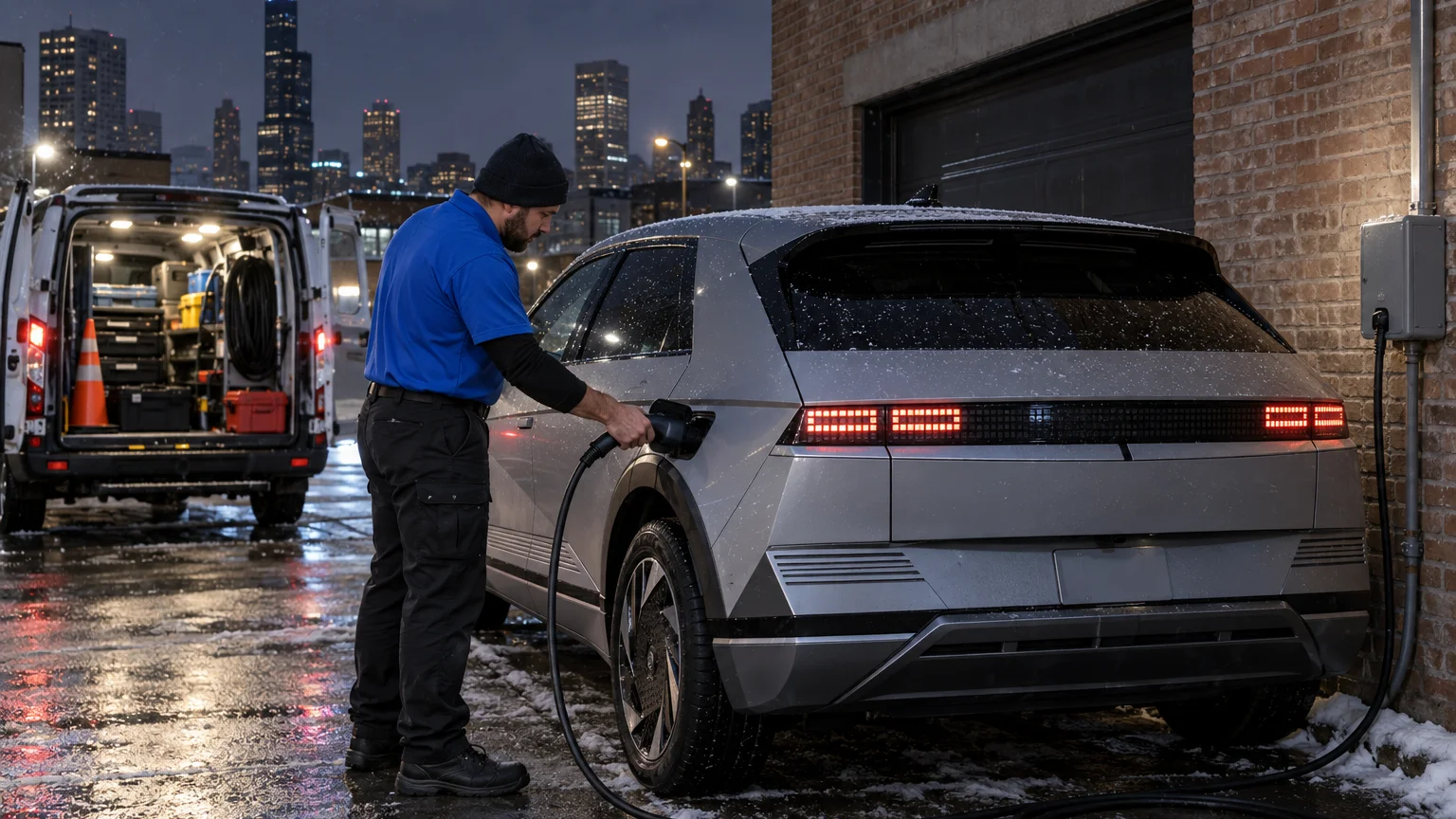
What Level 1 charging means for an Ioniq 5
A single charging-time answer would be misleading without a verified model-year source. The approved claims ledger doesn’t contain a Hyundai figure for a full Level 1 session. It also doesn’t confirm an hourly range gain for the Ioniq 5.
That means we won’t publish a guessed number. Hyundai may provide charging information in the manual supplied with your specific vehicle. Check that manual before planning around an overnight charge. You can also review the charging estimate displayed after the car recognizes the connection.
Start with three details from the vehicle itself:
- The battery level when you connect it
- The charging estimate shown after charging begins
- The battery level you need before leaving
Write down the starting level and displayed completion estimate. Check the vehicle again later. That comparison gives you information from your own Ioniq 5, connection, and charging session.
Don’t treat another owner’s result as a promise for your car. Their vehicle, starting level, model year, and charging setup may differ. An online calculator can also produce a precise-looking answer without confirming those details.
A regular household connection may appear convenient, but this page can’t confirm compatibility for every Ioniq 5 or outlet. Use the charging equipment and instructions approved for your model year. If the manual doesn’t settle the question, contact Hyundai or a qualified local professional before connecting.
The narrow decision is simple: trust the vehicle’s confirmed estimate, not a generic internet figure. If that estimate misses your departure needs, consider a different charging plan.
Why cold weather changes the charging decision
Chicago weather makes an overnight decision less forgiving. However, the approved ledger doesn’t contain a verified Hyundai cold-weather Level 1 charging figure. It also doesn’t support a fixed winter penalty for every Ioniq 5.
Check the broader guide to Ioniq 5 charging time in the cold for the seasonal planning question. This page stays focused on whether Level 1 can meet one specific departure need.
Use the estimate displayed by the vehicle during the actual session. Don’t substitute a mild-weather result from a different night. If the displayed estimate changes, plan from the current reading. That’s more useful than applying an unsupported percentage or hourly adjustment.
Chicagoland also has very different housing stock. In Chicago, 68.6% of housing was built before 1980, according to the approved Census-based ledger. Oak Park’s share is 78.6%, while Naperville’s is 11.7%. Those figures don’t tell you whether any individual outlet is suitable. They do show why a single metro-wide home-charging assumption doesn’t fit every garage.
Don’t infer outlet condition from a building’s age. Don’t assume a newer garage has the right setup, either. The approved claims don’t establish outlet requirements, inspection rules, or installation instructions for this vehicle.
If charging hasn’t started, don’t wait through the night hoping it will. Confirm the vehicle shows an active session. Then compare its estimate with your planned departure. If the numbers don’t fit, decide early whether you need another charging option.
When an overnight outlet won’t add enough range
An overnight session isn’t automatically enough because the car remains connected until morning. The useful question is whether the active session will meet your next driving need. Your Ioniq 5 display and model-year documentation should guide that decision.
First, confirm the session has started. Next, note the displayed estimate. Compare that estimate with your departure time and required battery level. If the estimate runs past your departure, the outlet plan doesn’t meet that trip.
Avoid turning that mismatch into a guessed charging-time formula. This page can’t verify the Ioniq 5 battery capacity, Level 1 input, or hourly gain for each model year. Those values must come from Hyundai documentation approved for the exact vehicle.
Your choices then depend on where the car sits. A vehicle safely parked at home presents a different problem from one stopped away from a usable connection. At home, you may be able to revise the trip or arrange another suitable charging option. Away from home, you may need help reaching usable range or moving the vehicle.
Our guide comparing a Level 1 charger with a mobile Level 2 boost explains that decision without promising a fixed result. A matched operator should confirm what service is appropriate for your Ioniq 5 and location.
Don’t confuse the ledger’s rescue figure with home Level 1 performance. The only approved charging result is a typical rescue charge of 10 to 20 miles of range during 15 to 30 minutes of Level 2 charging. That describes charging time, not operator arrival. It doesn’t establish what your home outlet will add overnight.
What to check when charging never starts
A slow session and a session that never starts aren’t the same problem. Before waiting for a charging estimate, confirm that the vehicle actually shows charging activity. If it doesn’t, don’t invent a completion time.
Use a short observation checklist:
- Look for the vehicle’s charging status.
- Read any message shown by the car.
- Confirm the connector appears fully seated.
- Check whether the charging equipment shows a warning.
- Save the exact message or photograph the display.
- Review the matching section of your model-year manual.
This checklist doesn’t diagnose the cause. It collects useful information without guessing. The approved claims ledger doesn’t identify Ioniq 5 charging error messages, connector procedures, outlet limits, or reset steps. Follow Hyundai’s instructions for your exact model year.
Don’t open electrical equipment or attempt wiring work based on a blog post. This page has no approved electrical safety procedure for an Ioniq 5 home connection. A qualified professional should assess electrical concerns.
The vehicle’s symptoms also matter. A car that powers on but rejects a charging session differs from a car that won’t power on. For a no-start condition, use the separate Ioniq 5 no-start and 12V checks. That article addresses a different search and shouldn’t be treated as a home charging-time guide.
If you contact an operator, share the exact vehicle message, location, and whether the car powers on. Also explain whether charging began and stopped or never began. Those details help the operator confirm whether mobile charging, another roadside service, or transport should be considered.
When a local operator may be the better option
A local operator may make sense when the active charging estimate won’t meet your departure need. It may also make sense when charging never starts and the car can’t reach another suitable option.
Charge Pro CHI is a referral service. We connect drivers with licensed, independent local EV charging professionals across Chicagoland. We don’t charge vehicles, employ technicians, own charging equipment, set prices, or provide warranties. The driver contracts with and pays the matched professional directly.
For an Ioniq 5, start with our non-Tesla EV rescue service. Explain the model year, displayed battery level, charging status, and exact location. The operator can confirm whether the requested service fits the vehicle and situation.
A mobile charging request also needs a clear goal. Tell the operator whether you’re trying to reach another charging option, clear a stranded location, or prepare for a necessary trip. Don’t assume a fixed charging result. The approved rescue range is typical, not a promise for every vehicle or session.
You can also review how mobile EV charging referrals work. Charge Pro CHI doesn’t promise arrival or turnaround times. The matched operator provides its own availability, scope, price, and service terms.
If the vehicle sits in an unsafe traffic location, treat personal safety as the first concern. This article can’t determine the right emergency response for a specific scene. Follow directions from public safety personnel and don’t remain somewhere exposed while troubleshooting.
When to call us
Call when your Ioniq 5 won’t begin charging, the active estimate misses your departure need, or the vehicle can’t reach another charging option. Call us at (708) 412-5005 and we’ll connect you with a local EV rescue operator.