Your Tesla is parked in Geneva, but the car won’t respond. The screen may be dark, the doors may remain locked, or the app may not wake the vehicle. Before arranging a charge or tow, identify whether the problem may involve the low-voltage system.
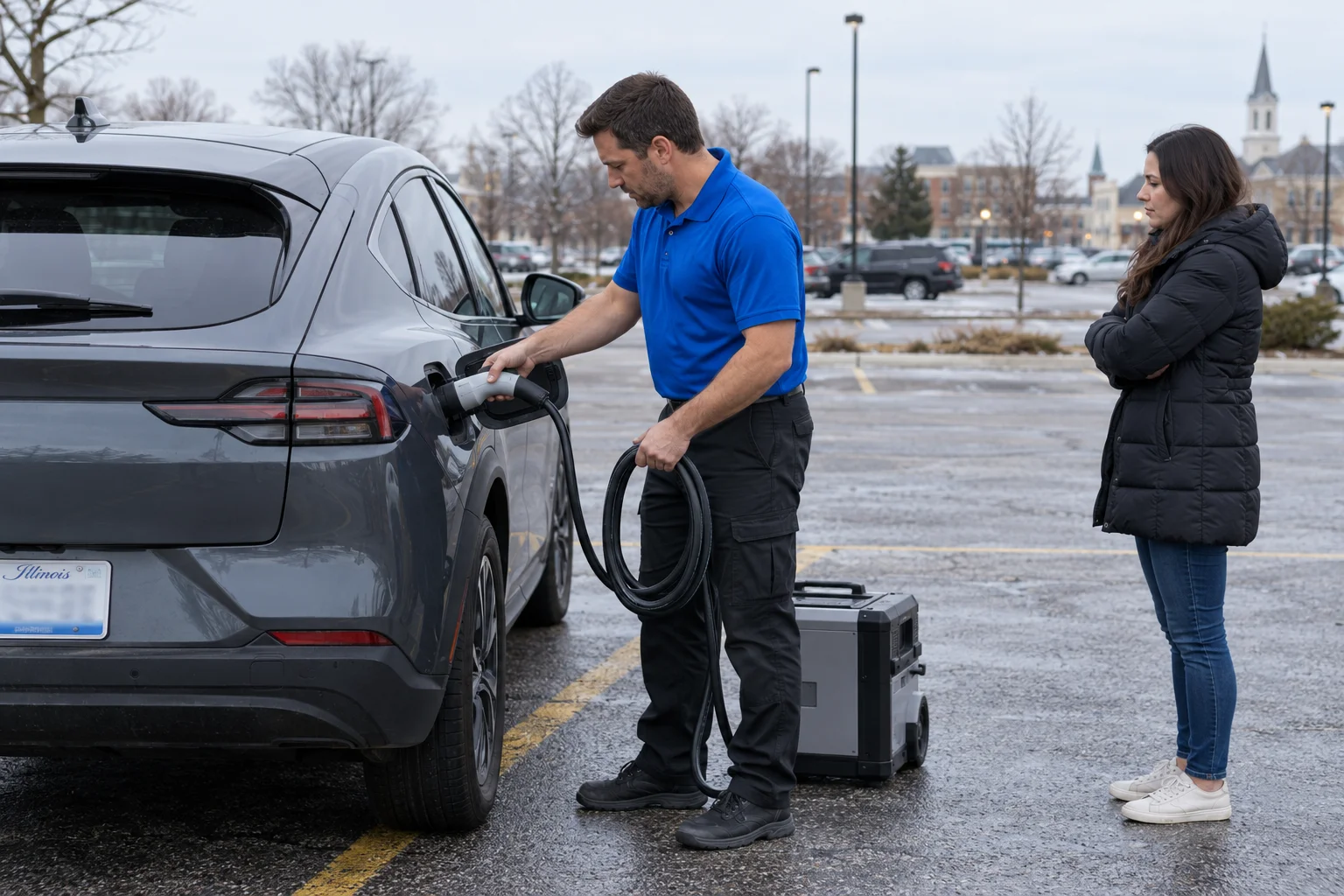
Recognize a 12V lockout before blaming the pack
A silent Tesla doesn’t automatically reveal which battery caused the problem. The available symptoms alone may not confirm a low-voltage failure. They also don’t prove the main battery pack is empty.
Start with what you can observe without opening panels. Note whether the touchscreen responds. Check whether the app connects and whether the doors open normally. Record any warning that appeared before parking. If the car showed a low-voltage message, copy its wording instead of paraphrasing it.
A charging problem and a no-power condition call for different help. A mobile charge addresses usable driving range. Low-voltage assistance deals with a car that may not wake or provide normal controls. Our guide to a dead Tesla pack versus a 12V problem explains why that distinction matters before booking an operator.
Don’t treat a dark screen as a complete diagnosis. The approved Tesla source doesn’t provide a universal symptom checklist covering every Tesla model and battery type. It also doesn’t establish one test that Geneva drivers can use to confirm the cause.
Tell the operator what happened immediately before the failure. Mention whether the Tesla was parked overnight, recently charged, or displayed a warning. Cold Fox Valley overnight parking is useful context, but it doesn’t prove why the car stopped responding.
The approved claims ledger doesn’t provide instructions for a damaged, smoking, unusually hot, or otherwise hazardous vehicle. Check Tesla’s official guidance and ask the appropriate emergency authority how to respond.
Check the Tesla manual for the correct access point
Tesla access and low-voltage procedures can vary by model, model year, and battery type. The approved claims ledger doesn’t confirm one universal access point or jump sequence. Confirm the correct process through Tesla’s official information for your exact vehicle.
Open the Tesla app or Tesla’s official owner information if you can. Match the instructions to the exact model and year. Don’t rely on a video simply because the Tesla looks similar. A Model 3 procedure may not apply to a Model S, Model X, Model Y, or Cybertruck.
The same caution applies within a model line. Battery type and vehicle configuration may change the published procedure. If the manual identifies a low-voltage access process, follow that version exactly. If you can’t confirm the correct instructions, wait for an operator familiar with that Tesla.
This Tesla 12V jump guide can help you organize the situation. It doesn’t replace the official manual for your vehicle. Charge Pro CHI also connects drivers with independent operators for a Tesla 12V battery jump.
The claims ledger doesn’t confirm panel access, connection points, cable placement, polarity steps, voltage requirements, or a safe sequence for every Tesla. Check Tesla’s official information for the exact vehicle or ask the independent operator to identify the applicable procedure.
Send the operator your model, model year, and any battery information shown in the app. That gives the operator a better starting point. It also reduces the chance of arriving prepared for a different low-voltage setup.
Plan around downtown and Metra lot access
A Tesla 12V rescue near downtown Geneva starts with access. “Geneva” isn’t enough for an operator trying to locate a parked car. Third Street, the Metra UP-West lot, and a business along Randall Road create different parking situations.
Share the exact lot, entrance, row, and nearby landmark. If you’re at the Metra station, state which side of the tracks you’re on. Add the parking-space number if one is posted. A dropped map pin can help, especially when the street address covers more than one parking area.
Describe any height limit, gate, narrow aisle, or blocked approach you can see. Don’t assume the operator’s vehicle can enter because your Tesla did. Charge Pro CHI doesn’t own rescue vehicles or control what equipment a matched operator uses.
Downtown parking can also change how the operator reaches the Tesla. Tell them whether another car is parked close to the front. Mention a curb, wall, snowbank, landscaping, or other visible obstacle. These details matter when the vehicle’s normal controls aren’t available.
If you’re commuting, don’t leave the key card or phone with someone who hasn’t been included in the plan. Confirm who will meet the operator and how that person can identify the Tesla. If the car is in a controlled lot, check the posted parking information or ask the lot’s responsible party about access. We couldn’t confirm a Geneva city rescue procedure or a special Metra-lot rescue rule from the approved ledger.
For a Tesla stopped elsewhere in Geneva, our Tesla roadside rescue service can connect you with an independent local operator. The operator sets the price, explains the proposed work, and bills you directly.
Know when a jump will not solve the problem
A low-voltage power source may help with access or vehicle controls in some situations, but that doesn’t establish the condition of the battery or the rest of the car. The approved ledger doesn’t support a promise that a jump will start every Tesla or restore normal operation.
Stop treating the visit as a simple jump if the vehicle remains unresponsive. The same applies when it wakes briefly and loses power again. Tell the operator exactly what changed. The claims ledger doesn’t verify a repeat-attempt procedure. Check the vehicle-specific manual and ask the operator what the observed result supports.
A successful wake-up also isn’t proof that the Tesla is ready to drive. Read the screen and note any warnings. Let the operator explain what the observed result supports. Battery replacement, vehicle repair, and towing are separate decisions. Charge Pro CHI doesn’t perform those services or warrant an operator’s work.
Transport requires special care when normal controls aren’t available. Tesla’s Model 3 owner’s manual says Tow Mode is reached through the touchscreen. Without low-voltage power, an external low-voltage supply is needed to use that screen. If Tow Mode can’t be activated, Tesla tells transporters to use self-loading dollies or tire skates. You can review Tesla’s Model 3 owner’s manual for the approved transporter guidance.
That statement applies to the cited Model 3 manual. It shouldn’t be extended to every Tesla without checking the correct manual. If towing becomes necessary, give the transporter the exact model and describe the no-power condition before the vehicle is moved.
Share the model and location with the operator
A useful request is short, specific, and based on observations. Start with the Tesla model and model year. Then provide the Geneva location, parking position, and access conditions.
Tell the operator whether the car is completely unresponsive or partly awake. Share the exact warning text if you have it. Mention whether the doors open, the screen works, and the app connects. These details describe the condition without pretending to diagnose it.
Include what you’ve already tried. State whether anyone connected an external power source and whether the vehicle changed afterward. Don’t hide an unsuccessful attempt. That information may affect the operator’s preparation and next recommendation.
A clear request might read: “Model 3 in the Geneva Metra UP-West lot. The screen is dark, the app won’t connect, and the car hasn’t been opened. It’s parked near the stated lot entrance with another car close to the front.” Adjust that description to match what you can actually see.
If the Tesla is along Randall Road, provide the business name, lot entrance, and nearest visible marker. If it’s near Third Street, give the cross street or a map pin. The approved ledger doesn’t provide instructions for collecting location details near traffic or inside restricted areas. Share only details already available to you, or ask the operator what else is needed.
Ask the operator what information they need before accepting the job. Confirm the proposed service and price directly with that operator. Charge Pro CHI doesn’t set prices, promise an arrival time, or decide whether the Tesla needs a jump, charge, repair, or tow.
When to call us
Call when your Tesla won’t wake and you need an operator to assess low-voltage assistance. Have the model, year, exact Geneva location, warning text, and parking-access details ready.
Call us at (708) 412-5005 and we’ll connect you with a local EV rescue operator.